
Top 7 Best Fixed Deposit Rates in India 2026: Maximize Your Savings
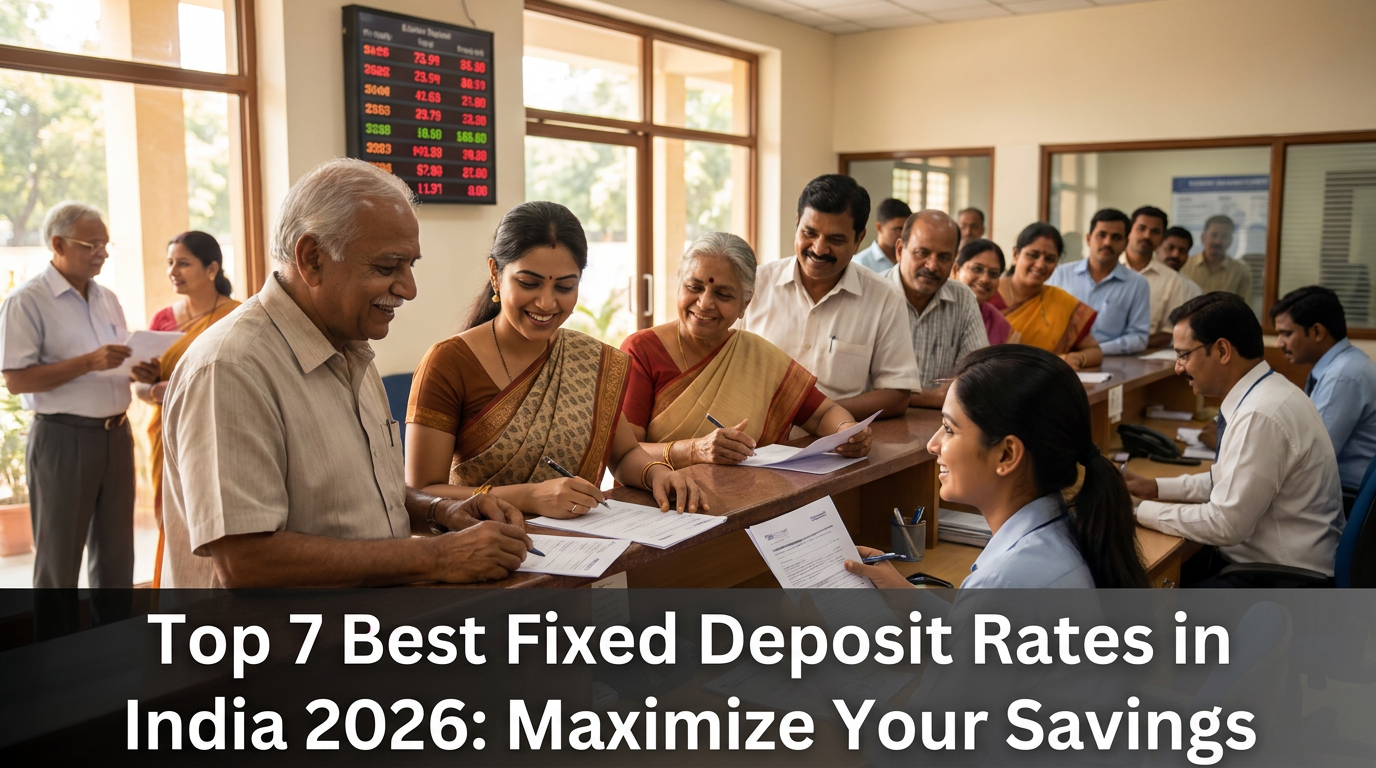
In 2026, securing your financial future means making smart investment choices. For many Indians, a Fixed Deposit (FD) remains a cornerstone of a stable portfolio, offering guaranteed returns and capital protection. With fluctuating market conditions, finding the best fixed deposit rates in India 2026 is crucial to maximize your savings. This comprehensive guide will walk you through the top FD options available, helping you make an informed decision to grow your wealth securely.
Fixed Deposits are a popular choice due to their inherent safety and predictable returns. Unlike equity investments, FDs are not subject to market volatility, making them ideal for risk-averse investors and those planning for short-to-medium term financial goals. As of May 2026, several banks and Non-Banking Financial Companies (NBFCs) are offering attractive interest rates, making it an opportune time to consider parking your funds in an FD.
Understanding Fixed Deposits and Why They're Still Relevant
A Fixed Deposit is a financial instrument provided by banks and NBFCs that offers investors a higher rate of interest than a regular savings account until the given maturity date. Your funds are locked in for a predetermined period, ranging from 7 days to 10 years, and you receive a fixed interest rate. This predictability is a major draw, especially in uncertain economic times. For more insights into smart investing, you might find our guide on Top 5 Best SIP Plans for Beginners 2026 helpful.
Key Benefits of Investing in FDs:
- Guaranteed Returns: Your interest rate is fixed at the time of investment, ensuring predictable income.
- Capital Protection: The principal amount invested is safe, making FDs a low-risk option.
- Flexibility: You can choose tenure options ranging from a few days to several years, aligning with your financial goals.
- Tax Benefits: Tax-saving FDs offer deductions under Section 80C of the Income Tax Act for investments up to ₹1.5 lakh.
- Loan Against FD: Most banks allow you to take a loan against your FD, providing liquidity without breaking the deposit.
Factors Influencing Fixed Deposit Rates in India
Several factors determine the interest rates offered on FDs. Understanding these can help you identify the best fixed deposit rates in India 2026:
- RBI's Monetary Policy: The Reserve Bank of India (RBI) plays a significant role. Changes in the repo rate directly impact lending and deposit rates across banks. You can find more information on RBI's policies on their official website.
- Inflation: Higher inflation generally leads to higher interest rates as banks try to offer real returns to depositors.
- Liquidity in the Banking System: When banks need more funds, they tend to offer higher FD rates to attract deposits.
- Economic Growth: A booming economy often sees higher demand for credit, prompting banks to raise deposit rates to fund loans.
- Bank-Specific Policies: Each bank has its own strategy, leading to variations in rates even among similar institutions.
Top 7 Best Fixed Deposit Rates in India 2026
Here's a comparative look at some of the banks and NBFCs offering the most attractive fixed deposit rates as of May 2026. Please note that these rates are indicative and can change. It's always advisable to check with the respective institutions for the most up-to-date information.
1. Small Finance Banks (SFBs) - Often Highest Rates
Small Finance Banks frequently offer higher interest rates compared to larger commercial banks to attract deposits and expand their customer base. Look out for banks like Suryoday Small Finance Bank, Unity Small Finance Bank, and Equitas Small Finance Bank, which often provide rates in the range of 7.50% to 8.50% for specific tenures, especially for senior citizens.
2. Private Sector Banks - Competitive Options
Leading private sector banks like HDFC Bank, ICICI Bank, and Axis Bank offer competitive rates, albeit slightly lower than SFBs. Their rates typically range from 6.75% to 7.25% for general customers, with an additional 0.50% for senior citizens. These banks offer robust digital banking services and widespread branch networks.
3. Public Sector Banks - Reliability and Trust
Public sector banks such as State Bank of India (SBI), Punjab National Bank (PNB), and Bank of Baroda are known for their reliability. While their rates might be a bit lower, usually between 6.25% to 6.75%, they are often preferred for their perceived safety. Senior citizens generally receive an extra 0.50% interest.
4. NBFCs - Attractive but Exercise Caution
Some Non-Banking Financial Companies (NBFCs) like Bajaj Finance offer very attractive FD rates, sometimes even exceeding 8.00%. While these can provide higher returns, it's crucial to assess their creditworthiness and stability before investing. Always check their ratings from agencies like CRISIL or ICRA. The SEBI website provides information on regulated entities.
5. Post Office Time Deposit (POTD) - Government Backed Security
For those prioritizing absolute safety, Post Office Time Deposits (POTD) are an excellent option. Backed by the Government of India, these offer competitive rates, often in line with public sector banks, typically around 6.70% to 7.00% for various tenures. These are particularly popular in rural and semi-urban areas.
6. Special FDs for Senior Citizens
Most banks and NBFCs offer an additional interest rate of 0.25% to 0.75% for senior citizens (aged 60 and above). This can significantly boost returns, especially for long-term deposits. Always inquire about these special rates.
7. Tax-Saving FDs - Dual Benefit
Tax-saving FDs come with a lock-in period of 5 years and allow you to claim deductions under Section 80C of the Income Tax Act, up to ₹1.5 lakh per financial year. While the rates are similar to regular FDs, the tax benefit makes them a compelling option for tax planning. You can find more details on tax regulations on the Income Tax Department website.
Comparison Table: Indicative FD Rates (General Public, May 2026)
| Bank/Institution Type | Typical Interest Rate Range (Annual) | Key Features |
|---|---|---|
| Small Finance Banks | 7.50% - 8.50% | Higher rates, good for aggressive savers, DICGC insured up to ₹5 Lakh |
| Private Sector Banks | 6.75% - 7.25% | Competitive rates, strong digital services, wider network |
| Public Sector Banks | 6.25% - 6.75% | High reliability, government-backed, widespread presence |
| NBFCs (e.g., Bajaj Finance) | 7.50% - 8.00%+ | Potentially highest rates, requires credit assessment, DICGC not applicable |
| Post Office Time Deposit | 6.70% - 7.00% | Government-backed security, good for conservative investors |
Note: All rates are indicative for general customers for a 1-5 year tenure as of May 2026. Senior citizens typically get an additional 0.50% interest.
How to Choose the Best Fixed Deposit for You
Selecting the best fixed deposit rates in India 2026 involves more than just looking at the highest interest rate. Consider these factors:
1. Interest Rate vs. Tenure
Different tenures offer different rates. Analyze your financial goals. If you need funds in 3 years, don't lock them for 5 years. Some banks offer higher rates for specific "sweet spot" tenures.
2. Bank Reputation and Safety
While all scheduled commercial banks are covered by DICGC (Deposit Insurance and Credit Guarantee Corporation) up to ₹5 lakh per depositor, it's wise to consider the bank's overall financial health, especially for NBFCs. The DICGC website provides details on deposit insurance.
3. Premature Withdrawal Penalties
Understand the penalties for premature withdrawal. While FDs offer liquidity through loans, breaking an FD before maturity usually incurs a penalty, reducing your effective interest rate.
4. Tax Implications
Interest earned on FDs is taxable as per your income tax slab. If your interest income exceeds ₹40,000 (₹50,000 for senior citizens) in a financial year, TDS (Tax Deducted at Source) will be applied. Consider tax-saving FDs or explore options like investing through a financial advisor to optimize your tax liability.
5. Senior Citizen Benefits
If you are a senior citizen, always prioritize banks and NBFCs that offer the highest additional interest rates for your age group. This extra 0.50% to 0.75% can make a substantial difference over the tenure.
Steps to Open a Fixed Deposit Account
Opening an FD account is a straightforward process:
- Research: Compare rates from various banks and NBFCs using online portals or by visiting branches.
- Choose Your Tenure: Decide on the duration for which you want to deposit your funds.
- Select Your Payout Option: Choose between cumulative (interest compounded and paid at maturity) or non-cumulative (interest paid monthly/quarterly/annually).
- Fill out the Application Form: Provide necessary KYC documents like Aadhaar, PAN card, and address proof. For Aadhaar Card Download Online 2026, refer to our guide.
- Fund the Account: Transfer the deposit amount from your savings account.
- Receive Confirmation: You'll get an FD receipt or certificate confirming your investment.
The Future of Fixed Deposits in India
As the Indian economy continues to evolve in 2026, the role of FDs remains significant. While newer investment avenues like mutual funds and digital assets gain traction, FDs continue to provide a stable foundation for many investors. Experts predict a steady interest rate environment, with potential minor fluctuations based on global economic cues and RBI interventions. Diversifying your portfolio with a mix of FDs and other instruments is often the wisest strategy for long-term financial health.
Frequently Asked Questions (FAQs) about Fixed Deposits
What is the minimum amount required to open a Fixed Deposit in India?
The minimum amount to open a Fixed Deposit can vary significantly between banks and NBFCs. Generally, it can be as low as ₹1,000 to ₹5,000 for most public and private sector banks. Some institutions might have higher minimums for specific schemes or tenures.
Are Fixed Deposits taxable in India?
Yes, the interest earned on Fixed Deposits is fully taxable in India. It is added to your total income and taxed as per your applicable income tax slab. If the interest income exceeds ₹40,000 (₹50,000 for senior citizens) in a financial year, banks will deduct TDS (Tax Deducted at Source).
Can I withdraw money from an FD before maturity?
Yes, most banks allow premature withdrawal of Fixed Deposits. However, doing so usually incurs a penalty, typically 0.50% to 1.00% less than the contracted interest rate for the period the deposit remained with the bank. Tax-saving FDs, however, have a strict 5-year lock-in and do not permit premature withdrawals.
What is the difference between cumulative and non-cumulative FDs?
In a cumulative FD, the interest earned is compounded and reinvested with the principal amount, and the entire amount (principal + compounded interest) is paid at maturity. In a non-cumulative FD, the interest is paid out periodically (monthly, quarterly, half-yearly, or annually) to the depositor, while the principal is returned at maturity. Cumulative FDs are ideal for wealth accumulation, while non-cumulative FDs suit those needing regular income.
Are Fixed Deposits safe in India?
Fixed Deposits with scheduled commercial banks in India are considered very safe. They are insured by the DICGC (Deposit Insurance and Credit Guarantee Corporation) up to a maximum of ₹5 lakh per depositor per bank. This means that even if a bank fails, your deposits up to ₹5 lakh are protected.
Conclusion: Choosing the best fixed deposit rates in India 2026 is a strategic move to secure your savings and achieve your financial objectives. By carefully comparing rates, understanding terms and conditions, and considering your risk appetite, you can make an informed decision that paves the way for a stable financial future. Always remember to diversify your investments and consult a financial advisor for personalized guidance.
Share your thoughts in the comments below: Which bank or NBFC offers the most attractive FD rates according to your experience?
What's your reaction?
Related Stories

Stand-Up India Scheme 2026 — Loans Up to ₹1 Crore for SC/ST & Women Entrepreneurs
Stand-Up India Scheme 2026 complete guide — loans ₹10 lakh to ₹1 crore for SC/ST and women entrepreneurs. Eligibility, documents, Stand-Up Mitra portal & how to apply.

PM Mudra Yojana 2026 — Loan Categories, Eligibility, Documents & How to Apply
Complete 2026 guide to PM Mudra Yojana — Shishu, Kishor, Tarun & Tarun Plus loans up to ₹20 lakh. Eligibility, documents, interest rates & how to apply online.

Annapurna Scheme West Bengal 2026 — Form Filling Guide, Eligibility, Documents
Complete 2026 guide to Annapurna Scheme West Bengal: 10 kg free foodgrain for destitute seniors. Step-by-step form filling, eligibility, documents and online tracking.